
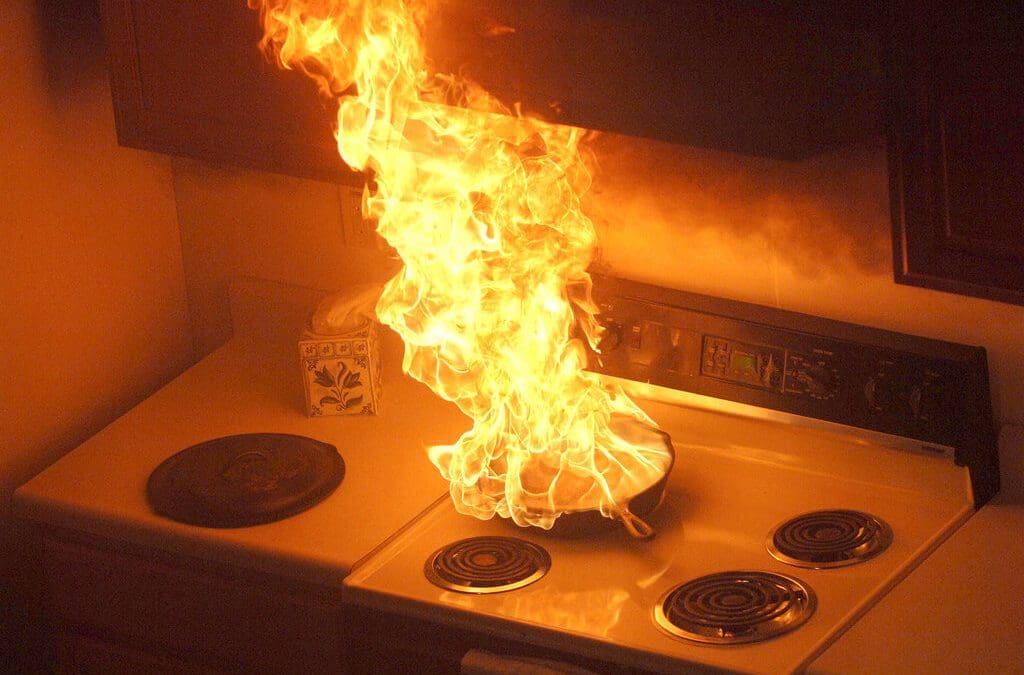
The kitchen is the most used room in most homes and, statistically, the most dangerous. Kitchen safety is one of those topics that most homeowners assume they have covered. But familiarity breeds complacency, and complacency in a room that combines open flame, hot surfaces, sharp tools, and water near electrical appliances creates real risk. Most kitchen fires, burns, and injuries aren’t the result of recklessness; they’re the result of habits that seem safe until the one time they aren’t.
The Kitchen Safety Habits That Prevent the Most Common Injuries
The kitchen hazards responsible for the most residential injuries and fires are almost all connected to cooking. Keeping the area around the stove clear of combustible materials is one of the most important kitchen safety habits. Dish towels, paper towels, pot holders, and food packaging left near the stovetop represent ignition risks that materialize quickly. The habit of clearing a defined zone around the cooking surface before and during cooking addresses this risk completely. Never leaving the kitchen while something is actively cooking on the stovetop is a kitchen safety principle that most people know and many ignore. Stovetop fires start faster than any other kitchen fire type and escalate within seconds. A pot boiling over onto a burner, grease spattering and igniting, or a handle positioned over another burner getting hot enough to cause a spill. Oven cooking with a timer allows more flexibility; stovetop cooking requires presence.
Kitchen Safety Practices When Working With Grease
Grease fires are the kitchen safety hazard that most frequently surprises homeowners because the correct response is counterintuitive. Water applied to a grease fire causes violent spattering that spreads burning grease rapidly. The correct responses are to cover the pan with a lid to cut off oxygen, turn off the heat, and leave the pan covered until fully cooled. A fire extinguisher rated for Class B fires should be mounted near the kitchen exit. Keeping the exhaust fan hood and filter clean is a kitchen safety maintenance step most homeowners neglect. Grease accumulates in filters and on hood surfaces over time, creating a fuel source directly above the cooking surface. Cleaning the filter monthly and the hood regularly eliminates this accumulated fire risk and keeps ventilation working effectively.
Food Prep Safety Habits
Sharp knives are safer than dull ones, a safety principle that surprises many homeowners but holds up consistently. Dull knives require more force, slip off food surfaces more readily, and create the unpredictable cutting behavior responsible for most kitchen cuts. Keeping knives sharp and storing them in a block, on a magnetic strip, or with blade guards rather than loose in a drawer protects both edges and hands. The “claw grip”, fingertips curled under while cutting, positions the knuckles as a blade guide and keeps fingertips away from the cutting edge. This one technique, applied consistently, prevents the most common kitchen knife injury. A stable cutting board, corrected with a damp towel underneath if it slides, makes safe technique possible. Food safety affects health just as seriously. Keeping raw meat separate from produce, washing hands before and after handling raw protein, using separate cutting boards for meat and produce, and maintaining refrigerator temperatures below 40°F prevent foodborne illness.
Frequently Asked Questions (FAQs)
What should I do if a grease fire starts on my stove?
Cover the pan immediately with a lid to cut off oxygen, then turn off the burner. Do not move the pan. Do not add water. Leave the lid on until fully cooled. If the fire is too large to cover or is spreading, use a Class B or ABC fire extinguisher, evacuate the kitchen, and call 911.
Where should a fire extinguisher be mounted?
Mount the extinguisher near the kitchen exit, not next to the stove where a fire might block access. It should be visible, accessible, and at a height every adult can reach. Every household member should know where it is and how to use it: pull the pin, aim at the base of the fire, squeeze the handle, and sweep side to side. An extinguisher no one knows how to use is significantly less effective than one whose operation has been briefly discussed.
How often should kitchen appliances be cleaned for safety?
Range hood filters should be cleaned monthly for households that cook regularly. The oven should be cleaned when visible grease buildup occurs. Toaster crumb trays should be emptied regularly.
Are children in the kitchen a safety concern, and how do I manage it?
Children in the kitchen is a normal and valuable experience. Kitchen safety for families comes down to clear zones and consistent rules. Children old enough to assist should learn kitchen safety habits from the beginning: how to hold a knife, how to handle hot surfaces, why the stove zone requires attention. Younger children should have a designated safe zone away from the stove and cutting board. Turning pot handles toward the back of the stove prevents accidental tipping.
What kitchen safety features should I look for when buying appliances?
Auto-shutoff features on countertop appliances eliminate the risk of appliances left on accidentally. Induction cooktops, which heat only the pan, significantly reduce burn risk compared to gas or electric coil cooktops. For households with young children or older adults, stove knob covers prevent accidental activation.
All Pro Property Inspections offers home inspection services in the Greater San Diego area. Contact us to request our services.